Categories: C=C Bond Formation >
Synthesis of unsaturated esters, amides and carboxylic acids
| Related: |
α,β-unsaturated compounds (C-C Coupling) |
Name Reactions

Recent Literature

Allyl-nickel catalysis enables α,β-dehydrogenation of carbonyl compounds. In
addition, an oxidative cycloalkenylation reaction provides access to
bicycloalkenones with fused, bridged, and spirocyclic ring systems using
unactivated ketone and alkene precursors.
D. Huang, S. M. Szewczyk, P. Zhang, T. R. Newhouse, J. Am. Chem. Soc.,
2019,
141, 5669-5674.

Activation of the silicon-carbon bond of α-trimethylsilylethylacetate in the
presence of P(i-PrNCH2CH2)3N as catalyst
allows an efficient synthesis of β-hydroxyesters and α,β-unsaturated esters.
Selectivity for either of these two products can be achieved simply by altering
the catalyst loading and reaction temperature.
K. Wadhwa, J. G. Verkade, J. Org. Chem., 2009,
74, 4368-4371.

A highly active ruthenium-based olefin metathesis catalyst, which contains a
1,3-dimesityl-4,5-dihydroimidazol-2-ylidene ligand, was found to efficiently
catalyze cross-metathesis and ring-closing metathesis
of a variety of electron-deficient olefins. The functional group compatibility
of the catalyst significantly expands the range of olefins that can participate
in the olefin metathesis reaction.
A. K. Chatterjee, J. P. Morgan, M. Scholl, R. H. Grubbs, J. Am. Chem. Soc., 2000,
122, 3783-3784.

Copper iodide is an effective cocatalyst for the olefin cross-metathesis
reaction. It has both a catalyst stabilizing effect due to iodide ion, as well
as copper(I)-based phosphine-scavenging properties. A variety of Michael
acceptors and olefinic partners can be cross-coupled under mild conditions in
diethyl ether and in water using the new surfactant TPGS-750-M.
K. Voigtritter, S. Ghorai, B. H. Lipshutz, J. Org. Chem., 2011,
76, 4697-4702.

A highly practical and general palladium-catalyzed α,β-dehydrogenation of esters
and nitriles gives synthetically useful yields of α,β-unsaturated esters,
lactones, and nitriles via generation of a zinc enolate or (cyanoalkyl)zinc
species followed by the addition of an allyl oxidant and a palladium catalyst.
Preliminary mechanistic investigations propose reversible β-hydride elimination
and turnover-limiting, propene-forming reductive elimination.
Y. Chen, J. P. Romaire, T. R. Newhouse, J. Am. Chem. Soc., 2015,
137, 5875-5878.

Horner-Emmons Synthesis with Minimal Purification Using ROMPGEL: A Novel
High-Loading Matrix for Supported Reagents
A. G. M. Barrett, S. M. Cramp, R. S. Roberts, F. J. Zecri,
Org. Lett., 1999, 1, 579-582.
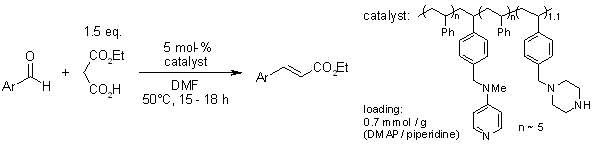
A bifunctional polystyrene bearing both DMAP and piperidine groups is an
effective organocatalyst for decarboxylative Doebner-Knoevenagel reactions of
arylaldehydes and monoethyl malonate to give E-cinnamates in high yields.
A synergistic effect obtained by co-locating the two different catalytic amine
groups on the same polymer backbone has been detected.
J. Lu, P. H. Toy, Synlett, 2011,
1723-1726.

Thiouronium ylides are valuable olefination reagents for stereodivergent
carbonyl olefinations. Using these reagents, aldehydes are converted to Z-alkenes
with high stereoselectivity and broad substrate scope, while N-tosylimines
provide a similarly proficient entry to E-alkenes. In-depth computational
and experimental studies clarified the mechanistic details of this unusual
reactivity.
J. Merad, P. S. Grant, T. Stopka, J. Sabbatani, R. Meyrelles, A. Preinfalk,
J. Matyasovsky, B. Maryasin, L. González, N. Maulide, J. Am. Chem. Soc.,
2022, 144, 12536-12543.

The combination of cerium(III) chloride heptahydrate with sodium iodide
mediates a useful dehydration of β-hydroxy ketones and β-hydroxy esters to the
corresponding α,β-unsaturated derivatives in refluxing acetonitrile. This method,
which uses cheap and friendly reagents, provides the corresponding (E)-isomers
in good yields as the only isolable products.
G. Bartoli, M. C. Bellucci, M. Petrini, E. Marcantoni, L. Sambri, E.
Torregiani,
Org. Lett., 2000, 2, 1791-1793.

In an operationally convenient, mechanistically unique protocol, Lewis base
activation of silyl acetals generates putative pentacoordinate silicate acetals,
which fragment into aldehydes, silanes, and alkoxides in situ. Subsequent
deprotonative metalation of phosphonate esters followed by HWE with aldehydes
furnishes enoates.
U. S. Dakarapu, A. Bokka, P. Asgari, G. Trog, Y. Hua, H. H. Nguyen, N. Rahman,
J. Jeon, Org. Lett.,
2015,
17, 5792-5795.

Morpholine efficiently catalyzes Galat reactions between aldehydes and
substituted malonic acids half oxyester in refluxing toluene to provide diverse
α,β-disubstituted acrylates in to good yields. This method constitutes an
attractive alternative to existing methods in terms of scope and
eco-compatibility.
T. Xavier, S. Condon, C. Pichon, E. Le Gall, M. Presset,
Org. Lett., 2019, 21, 6135-6139.

A stereoinvertive deoxygenation of trans-3-arylglycidates provides
thermodynamically less stable (Z)-cinnamate esters by using nickel
triflate and triphenylphosphine. The reaction offers broad functional group
tolerance and affords the corresponding (Z)-cinnamate esters in high
yields and with moderate to high E/Z ratios.
S. Akkarasamiyo, S. Chitsomkhuan, S. Buakaew, J. S. M. Samec, P. Chuawong, P.
Kuntiyong, Synlett, 2022,
33,
1353-1356.

The Doebner-Knoevenagel condensation enables a selective synthesis of
acrylamides under mild conditions at ambient temperatures. The scalable reaction
tolerates a wide range of functional groups, and affords the E-isomer
with high selectivity. An organocatalytic mechanism has been proposed.
M. J. Zacuto, J. Org. Chem., 2019, 84,
6465-6474.

Manganese catalyzes a direct α-alkenylation of aryl amides with primary
alcohols to provide α,β-unsaturated amides in good yields with excellent
selectivity with water and dihydrogen as the only byproducts. Mechanistic
studies indicate that the Mn(I) catalyst oxidizes the alcohols to their
corresponding aldehydes and mediates an efficient C=C bond formation through
aldol condensation.
B. K. Pandia, C. Gunanathan, J. Org. Chem., 2021, 86,
9994-10005.
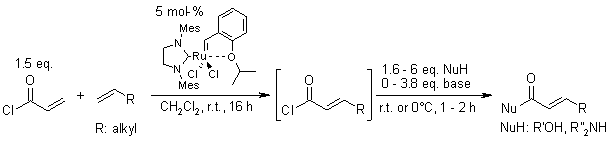
A very simple one-pot process involving a cross-metathesis between acryloyl
chloride and a terminal olefin followed by the addition of a nucleophile allows
the synthesis of various functionalized α,β-unsaturated carbonyl compounds in
good yield.
L. Ferrié, S. Bouzbouz, J. Cossy, Org. Lett., 2009,
11, 5446-5448.

Phosphine and amine functionalized polystyrene was used in one-pot Wittig
reactions with an aldehyde and either an α-halo-ester, -ketone, or -amide. Due
to the heterogeneous nature of the polymer, the desired alkene product of these
reactions could be isolated in excellent yield in essentially pure form after
only filtration and solvent removal.
P. S.-W. Leung, Y. Teng, P. H. Toy, Org. Lett., 2010,
12, 4996-4999.

A simple protocol for a highly E-selective
Wadsworth-Emmons reaction via deprotonation of alkyl diethylphosphonoacetates
with MeMgBr allows the conversion of a range of straight-chain and branched aliphatic, substituted aromatic,
and base-sensitive aldehydes.
T. D. W. Claridge, S. G. Davies, J. A. Lee, R. L. Nicholson, P. M. Roberts, A.
J. Russel, A. D. Smith, S. M. Toms, Org. Lett., 2008,
10, 5437-5440.

Water is an effective medium for the Wittig reaction over a wide range of
stabilized ylides and aldehydes including especially substrates with large
hydrophobic entities. Despite sometimes poor solubility of the reactants, good
yields and high E-selectivities are achieved, and the rate of the
reactions in water is unexpectedly accelerated.
A. El-Batta, C. Jiang, W. Zhao, R. Anness, A. L. Cooksy, M. Bergdahl, J. Org. Chem., 2007,
72, 5244-5259.

A. El-Batta, C. Jiang, W. Zhao, R. Anness, A. L. Cooksy, M. Bergdahl, J. Org. Chem., 2007,
72, 5244-5259.

A mild and efficient one-pot Wittig reaction performed in both water and
sodium dodecyl sulfate (SDS)-water solution in open atmosphere allowed the
synthesis of various α,β-unsaturated esters in good yields.
F. Orsini, G. Sello, T. Fumagalli, Synlett, 2006,
1717-1718.

The carbocation Lewis acid tritylium tetrafluoroborate (TrBF4) catalyzes a 1,2-hydride migration
of α-alkyldiazoacetates to provide (Z)-α,β-unsaturated esters in good yields and
with high regioselectivities. Using the same catalytic system, in situ-generated
cross-coupling adducts of aldehydes and α-alkyldiazoacetates give α-branched
β-ketocarbonyls.
W. Shang, D. Duan, Y. Liu, J. Lv,
Org. Lett., 2019, 21, 8013-8017.

A riboflavin-mediated highly (Z)-selective and operationally simple,
catalytic isomerization has been applied to a variety of enone-derived
substrates. The reaction can also be used for the synthesis of the medically
relevant 4-substituted coumarin scaffold.
J. B. Metternich, R. Gilmour, J. Am. Chem. Soc., 2015,
137, 11254-11257.

Bis(2,2,2-trifluoroethyl)bromophosphonoacetate, a Novel HWE Reagent for the
Preparation of (E)-α-Bromoacrylates: A General and Stereoselective Method for
the Synthesis of Trisubstituted Alkenes
K. Tago, H. Kogen,
Org. Lett., 2000, 2, 1975-1978.

Optimized conditions for the Wittig reaction of aldehydes with ethyl
tribromoacetate and triphenylphosphine allowed the synthesis of α-bromoacrylates
with high selectivity. A simple and efficient one-pot procedure was developed
for the preparation of various conjugated acetylenic carboxylates in good yields.
J.-G. Kim, D. H. Kang, D. O. Jang, Synlett, 2008,
443-447.

Ethyl (benzothiazol-2-ylsulfonyl)acetate engaged in the modified Julia
olefination with aldehydes under mild reaction conditions to yield α,β-unsaturated esters.
Aryl aldehydes and aliphatic aldehydes possessing significant chain
branching elements gave trans alkene products with
high stereoselectivity, while straight chain aliphatic
aldehydes gave cis products preferentially.
P. R. Blakemore, D. K. H. Ho, W. M. Nap, Org. Biomol. Chem., 2005, 3, 1365-1368.

gem-Dibromomethylarenes: A Convenient Substitute for Noncommercial Aldehydes
in the Knoevenagel−Doebner Reaction for the Synthesis of α,β-Unsaturated
Carboxylic Acids
J. K. Augustine, Y. A. Naik, A. B. Mandal, N. Chowdappa, V. B. Praveen, J. Org. Chem., 2007,
72, 9854-9856.

P(NMe2)3 mediates umpolung alkylation
of methyl aroylformates with benzylic and allylic bromides via a two-electron redox addition of the
tricoordinate phosphorus reagent to the α-keto ester compound (Kukhtin-Ramirez
addition). Depending on the work-up conditions, either
Barbier-type addition or ylide-free olefination products can be isolated.
S. R. Wang, A. T. Radosevich, Org. Lett.,
2015,
17, 3810-3813.

A complete E-selective synthesis of α,β-unsaturated amides through a
sequential reaction of a range of dichloroamides with a variety of aldehydes is
promoted by Rieke manganese (Mn*). The unsaturated amides obtained are readily
and efficiently transformed into α,β-unsaturated ketones, aldehydes, or
carboxylic acids.
J. M. Concellón, H. Rodríquez-Solla, P. Díaz, J. Org. Chem., 2007,
72, 7974-7979.

A generally applicable, sequential reaction of dichloroesters with various
aldehydes is promoted by active manganese to give α,β-unsaturated esters with
complete control of stereoselectivity. The C-C double bond can be di- or
trisubstituted. A mechanism based on a successive aldol-type reaction/-elimination
is proposed.
J. M. Concellón, H. Rodríquez-Solla, P. Díaz, R. Llaona, J. Org. Chem., 2007,
72, 4396-4400.

The stereoselective
reaction of different aldehydes and ethyl dibromoacetate promoted by SmI2 or
CrCl2 gives
(E)-α,β-unsaturated esters by an an aldol-type
reaction and a subsequent β-elimination reaction.
J. M. Concellon, C. Concellon, C. Mejica, J. Org. Chem., 2005, 70, 6111-6113.

A mild protocol for the Horner-Wadsworth-Emmons reaction of diprotic
phosphonates makes use of a zinc triflate promoter in the presence of mild
tertiary amine bases to produce α,β-unsaturated carboxylic acids and amides.
D. J. Schauer, P. Helquist, Synthesis, 2006, 3654-3660.

D. J. Schauer, P. Helquist, Synthesis, 2006, 3654-3660.

The stereoselective reaction of different aldehydes and dibromoacetic acid
promoted by SmI2 gives (E)-α,β-unsaturated
carboxylic acids. The mechanism is discussed.
J. M. Concellon, C. Concellon, J. Org. Chem., 2006, 71, 1728-1731.

A domino oxidation of primary alcohols gives α,β-unsaturated compounds using the
combination of PCC-NaOAc and stabilized Wittig reagents.
J. Shet, V. Desai, S. Tilve, Synthesis,
2004,
1859-1863.

A Cs2CO3-promoted carboxylation of N-tosylhydrazones
and CO2 proceeded efficiently at 80°C under atmospheric CO2
and gave the corresponding α-arylacrylic acids in good yields.
S. Sun, J.-T. Yu, Y. Jiang, J. Cheng, J. Org. Chem.,
2015,
80, 2855-2860.

The reaction of alkyl-substituted sec-ethoxyalkynyl acetates with water
catalyzed by Hg(OTf)2 afforded α,β-unsaturated esters in excellent
yield with high catalytic turnover under very mild reaction conditions with
virtually complete E-selectivity.
M. Nishizawa, H. Hirakawa, Y. Nakagawa, H. Yamamoto, K. Namba, H. Imagawa, Org. Lett., 2007,
9, 5577-5580.

Exposure of N-acyloxyphthalimides (redox-active esters) to
galvanostatic electroreductive conditions enables a general regio- and
stereoselective alkylation of Morita-Baylis-Hillman compounds in high yields.
The method offers wide functional group tolerance.
G. Bertuzzi, G. Ombrosi, M. Bandini, Org. Lett.,
2022, 24, 4354-4359.

An iridium-catalyzed allylic alkylation of phosphonates followed by a
Horner-Wadsworth-Emmons olefination provides skipped dienes bearing a C3
stereogenic center, generally with outstanding enantioselectivities.
A. Seal, S. Mukherjee, Org. Lett., 2023, 25,
2253-2257.

N-Sulfonyl ketenimine formation followed by a probable 1,3-OAc migration
([3,3]-sigmatropic rearrangement) enables a synthesis of trans-α,β-unsaturated
N-tosylamides from readily accessible propargyl acetates and sulfonyl
azides in the presence of CuI as catalyst. The reaction is very general and
affords products at ambient temperature with excellent diastereoselectivity in
good yields.
Y. K. Kumar, G. R. Kumar, M. S. Reddy, J. Org. Chem., 2014,
79, 823-828.

A transition metal-free radical α,β-dehydrogenation of saturated amides under
mild conditions even provides α,β-unsaturated Weinreb amides and acrylamides.
Mechanistic studies confirm the radical nature of this transformation.
M.-M. Wang, G.-H. Sui, X.-C. Cui, H. Wang, J.-P. Qu, Y.-B. Kang, J. Org. Chem., 2019, 84,
8267-8274.

Palladium-Catalyzed Decarbonylative Heck Coupling of Aromatic Carboxylic
Acids with Terminal Alkenes
W. Yu, L. Liu, T. Huang, X. Zhou, T. Chen,
Org. Lett., 2020, 22, 7123-7128.

The first allylic C-H olefination with α-diazo esters synergistically catalyzed
by a palladium(II) complex and (salen)CrCl directly generates conjugated polyene
derivatives in good yields and with excellent stereoselectivities.
P.-S. Wang, H.-C. Lin, X.-L. Zhou, L.-Z. Gong, Org. Lett., 2014,
16, 3332-3335.

A simple iridium/copper relay catalysis system enables a direct aerobic
α,β-dehydrogenation of γ,δ-unsaturated amides and carboxylic acids to provide
conjugated dienamides and dienoic acids in excellent yield. Instead of α-C-H
metalation, this reaction proceeds by β-C-H activation, which results in
enhanced α-acidity.
Z. Whang, Z. He, L. Zhang, Y. Huang, J. Am. Chem. Soc., 2018,
140, 735-740.

A sequence of three reactions enables the synthesis of trisubstituted (E)-α,β-unsaturated
esters: an aldol reaction, acetylation of the hydroxy group at the β-position,
and an E1cB reaction induced by DBU. The E1cB reaction works with a
diastereoisomeric mixture of β-hydroxy ester intermediates. The whole sequence
is usable for gram-scale syntheses of trisubstituted (E)-α,β-unsaturated
esters.
M. Ozeki, H. Egawa, A. Kuse, T. Takano, N. Yasuda, H. Mizutani, S. Izumiya, D.
Nakashima, K. Arimitsu, T. Miura, T. Kajimoto, S. Hosoi, H. Iwasaki, N. Kojima,
M. Node, M. Yamashita,
Synthesis, 2015, 47, 3392-3402.

A Ba/Pd cooperative catalysis system enables a dehydrative cross-coupling of
allylic alcohols with P-ylides followed by a Wittig reaction in one pot. Various
multisubstituted 1,4-dienes were isolated in very good yields with a broad range
of P-ylides and aldehydes with excellent E selectivity.
P. Xie, W. Fu, X. Cai, Z. Sun, Y. Wu, S. Li, C. Gao, X. Yang, T.-P. Loh,
Org. Lett., 2019, 21, 7055-7059.

The use of FeCl3 as catalyst enables a rapid decarboxylation of
methylene tethered cyclic 1,3-diesters in the presence of water to yield
α,β-unsaturated acids with high E-stereoselectivity under both microwave
and conventional heating conditions. This powerful approach proved to be
scalable to gram scale synthesis.
A. R. Mohite, R. G. Bhat, Org. Lett., 2013,
15, 4564-4567.

Efficient and stereoselective rearrangement catalyzed by only one mole-percent
gold(I) chloride/silver(I) trifluoromethanesulfonate of Baylis-Hillman acetates
afforded 2-(acetoxymethyl)alk-2-enoates under mild reaction conditions in very
good yields with 100% E-selectivity.Cyclohex-2-enone derived
Baylis-Hillman acetates gave 2-alkylidenecyclohex-3-enones by elimination of
acetic acid.
Y. Liu, D. Mao, J. Qian, S. Lou, Z. Xu, Y. Zhang, Synthesis, 2009,
1170-1174.

Zinc-promoted reduction of 2-(bromomethyl)alkenoates derived from Baylis-Hillman adducts gave (E)-2-methylacrylates in good yield and high
stereoselectivity. Synthesis of the male ant pheromone (E)-2,4-dimethyl-2-hexenoic
acid was performed using this simple methodology.
L. Fernandes, A. J. Bortoluzzi, M. M. Sa, Tetrahedron, 2004,
60, 9983-9989.

Stereoselective β-elimination of diastereomeric mixtures of
2-bromo-3-hydroxyesters is achieved by using unactivated manganese and
trimethylsilyl chloride, to yield (E)-α,β-unsaturated esters with total
diastereoselectivity.
J. M. Concellón, H. Rodríguez-Solla, V. del Amo, Synlett,
2006, 315-317.

Dimethyl sulfoxide efficiently causes the reductive elimination of 3-aryl
2,3-dibromopropanoates to cinnamates with good yield. For most substrates
debromination is the major pathway, whereas dehydrobromination is a competing
pathway with thiophene derivatives. 1H NMR, 81Br NMR, and
MS indicated the formation of brominated-DMSO, MeBr, and HBr as byproducts.
W. Li, J. Li, M. Lin, S. Wacharasindhu, K. Tabei, T. S. Mansour, J. Org. Chem., 2007,
72, 6016-6021.

(E)-α-Ethynyl-α,β-unsaturated esters were prepared in good yields from
allenyl acetates by treatment with 10 mol % DABCO in DMF at room temperature.
Y. Choe, P. H. Lee, Org. Lett., 2009,
11, 1445-1448.

α,β-Dihalopropanoate derivatives undergo efficient, selective
dehydrohalogenation to form α-haloacrylate analogues in the presence of DMSO. A
variety of α-halo Michael acceptors were prepared in dimethyl sulfoxide under
mild, base-free conditions, including the preparation of α-bromoacrolein and
α-chloro- and bromoacrylonitriles.
W. Li, J. Li, Z.-K. Wan, J. Wu, W. Massefski, Org. Lett., 2007,
9, 4607-4610.

Deprotonation of a 64:36 mixture of ethyl bromo(diphenylphosphono)acetate and
ethyl dibromo(diphenylphosphono)acetate using NaH as base at 0 °C and subsequent
reaction with various aldehydes provided unsaturated α-bromoesters in good
yields and high E-selectivities.
T. Olpp, R. Brückner, Synthesis,
2004, 2135-2152.

A zinc carbenoid-mediated chain extension of β-dicarbonyl compounds
provides access to α,β-unsaturated-γ-keto esters and amides with complete E selectivity
via an intermediate
zinc enolate, which is treated sequentially with iodine and DBU.
M. D. Ronsheim, C. K Zercher, J. Org. Chem., 2003, 68,
4535-4538.

Among the reported examples of new reactivity of the hypervalent iodine
reagent DMP (Dess-Martin periodinane) are the one-step oxidation of
secondary amides to imides and N-acyl vinylogous carbamates or ureas
and the direct oxidation of benzylic and related primary amines to the
corresponding nitriles.
K. C. Nicolaou, C. J. N. Mathison, Angew. Chem. Int. Ed., 2005,
44, 5992-5997.

In the presence of ruthenium-based olefin metathesis catalysts and
triphenylphosphine, α,β-unsaturated aldehydes can be olefinated with
diazoacetates. A tandem transformation of
terminal olefins to 1,3-dienoic olefins in a single operation based on olefin
cross-metathesis and Wittig olefination has been developed.
R. P. Murelli, M. L. Snapper, Org. Lett., 2007,
9, 1749-1752.

An expeditious synthesis of α-substituted tert-butyl acrylates from
commercially available aldehydes and Meldrum's acid includes a telescoped
condensation-reduction sequence to afford 5-monosubstituted Meldrum's acid
derivatives followed by a Mannich-type reaction triggered by a rapid
cycloreversion of the dioxinone ring on heating with tert-butyl alcohol.
C. G. Frost, S. D. Penrose, R. Gleave, Synthesis, 2009,
627-635.

TiCl4/Et3N promotes a condensation of acetate and formate
esters to provide (E)-β-alkoxy- and (E)-β-aryloxyacrylate moieties.
A plausible mechanism involving a bimetallic titanium intermediate for this type
of transformation.
J. M. Álvarez-Calero, Z. D. Jorge, G. M. Massanet, Org. Lett.,
2016, 18, 6344-6347.

A copper-amine catalyst system enables a general and facile synthetic method
for β-fluoroenones from silyl enol ethers or ketones via tandem process of
difluoroalkylation-hydrolysis-dehydrofluorination. This reaction offers high
yields, excellent Z/E ratios, a low-cost catalyst, and a broad
substrate scope.
Y. Li, J. Liu, S. Zhao, Y. Du, M. Guo, W. Zhao, X. Tang, G. Wang, Org. Lett.,
2018, 20, 917-920.

A Pd-catalyzed α,β-desaturation of N-protected lactams provides
conjugated unsaturated counterparts under mildly acidic conditions at room
temperature. The reaction tolerates a wide range of functional groups and shows
reactivity complementary to that of prior desaturation methods. Lactams with
various ring sizes and substituents at different positions all reacted smoothly.
M. Chen. G. Dong, J. Am. Chem. Soc., 2017,
139, 7757-7760.
Related

A gold-catalyzed intermolecular hydroarylation of propiolic acid with arylboronic acids is highly regioselective
and occurs at the less electrophilic carbon to afford α-aryl acrylic acids in
attractive yields. This carboxylic acid-directed arylation offers easy access to NSAID precursors.
K. S. Basha, R. Balamurugan, Org. Lett., 2023, 25,
4803-4807.

A unique Au-allenylidene pathway enables an in situ formation of highly
unsaturated alkylidene ketenes from propargyl alcohol derivatives. A subsequent trapping with a broad
range of nucleophiles such as alcohols, phenols, water, amines, and sulfoximines
in the presence of an N-oxide provides α,β-unsaturated drug and natural
product derivatives.
X. Sun, X. Duan, N. Zheng, W. Song, Org. Lett., 2023, 25,
2798-2805.